Predicting Actuation Strain in Quaternary Shape Memory Alloy NiTiHfX Using Machine Learning
A machine-learning model links composition, manufacturing, heat treatment, stress, and post-processing to recoverable actuation strain in NiTiHfX alloys.
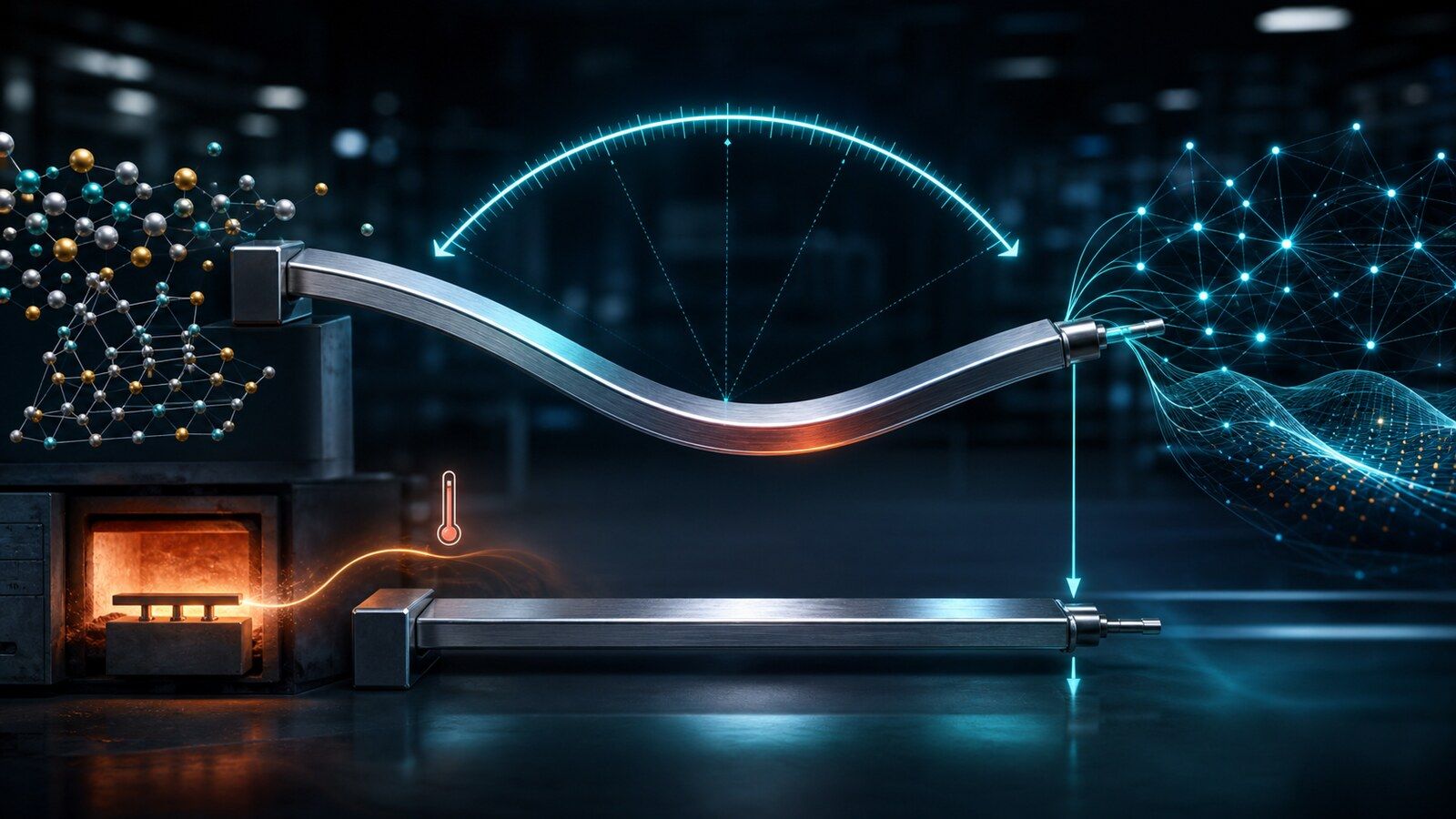
The study compiles 901 datasets containing 17,119 data points to predict recoverable actuation strain in quaternary NiTiHfX shape-memory alloys. Inputs include composition, manufacturing route, heat treatment, applied stress, and post-processing.
The reported global model reaches an R-squared value of 0.96. The work demonstrates how machine learning can help researchers select promising alloy compositions and processing pathways before committing to costly experiments.
Have a real process in mind?
Turn operational friction into a practical AI project.
Tell us where work is slow, repetitive, or hard to scale. We’ll help you find the smallest useful place to start.